Order: Columbiformes; Family: Columbidae
Eurasian Collared-Dove
Streptopelia decaocto
A medium-sized, slender dove with a square-tipped tail. It is known for its rapid expansion across continents and its persistent cooing.
Explore Eurasian Collared-Dove in the encyclopedia →Identify your own birds.
Get a report just like this from any photo or call, free.
Plumage & appearance
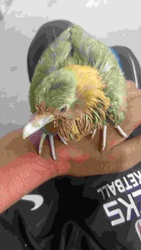
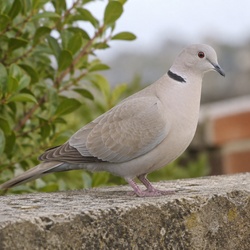
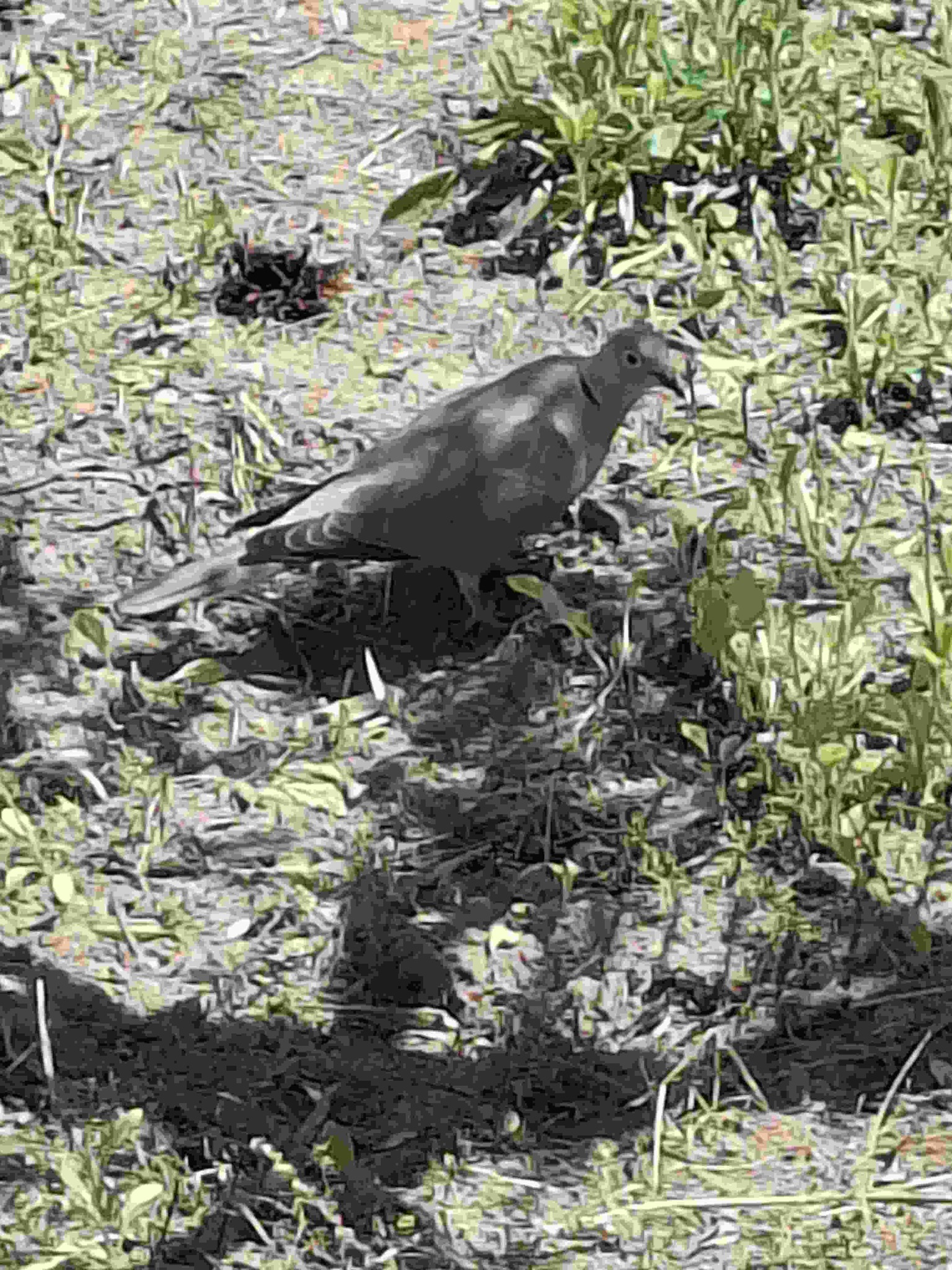
Overall pale sandy-gray to brownish-gray. Primary wing feathers are dark. Adults have a distinctive black narrow half-collar on the back of the neck; juveniles lack this collar or have a very faint one.
Key field marks
Black half-collar on hindneck, square tail with white outer corners, and pale gray body coloration.
Size & weight
Length: 29-33 cm; Wingspan: 47-55 cm; Weight: 125-240 g
Voice — call & song
A rhythmic three-syllable coo: 'koo-KOO-kook', with the middle syllable emphasized. Also a harsh, nasal 'hwah' given during flight or landing.
Diet & foraging
Primarily seeds and grains, but also consumes berries and occasional insects; forages mostly on the ground.
Habitat
Urban, suburban, and agricultural areas. Often avoids deep forests or extremely arid deserts.
Migration & movement
Resident or sedentary in most of its range, though birds in the northernmost fringes may move south.
Nesting & breeding
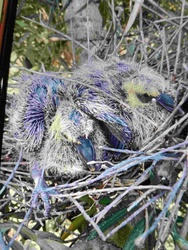
Builds a flimsy platform of twigs in trees, shrubs, or on man-made structures. Lays 2 white eggs; both parents incubate and feed the young 'crop milk'.
Similar species
Mourning Dove (slimmer, pointed tail, no neck collar) and African Collared-Dove (smaller, paler, different vocalization).
Ecological significance
Provides a food source for urban and suburban birds of prey; may compete with native dove species for resources in some areas.
Conservation status
Least Concern (Population increasing)
Observation tips
Look for them on telephone wires, fences, and at bird feeders in suburban or rural agricultural settings.
Interesting facts
This species is one of the great colonizers of the avian world, spreading from Asia through Europe and then across the entire North American continent in just a few decades.
More like this